
Big tasks used to freeze me. I would stare at something like “build a sales page” and feel so lost that I did nothing for days. The problem was never laziness. The problem was the task was too big and too vague. Once I started breaking big tasks into a simple paper checklist, I finally started finishing them.
1. I Write the Big Task at the Top, in My Own Words
Before anything else, I take a notebook and write the big task in one plain sentence at the top of the page. Not fancy words, just what I actually need to do. “Make a sales page for my ebook.” That is it.
This sounds too simple to matter, but it matters a lot. When the task lives only in my head, it grows into something scary. On paper, it becomes just a sentence. My brain can argue with a sentence. It cannot argue with a fog.
2. I Break It Into Steps So Small They Feel Silly
This is the part that changed everything for me. Under the big task, I write every tiny step I can think of. Not five big steps. Ten or fifteen small ones. “Pick a page title.” “Write the headline.” “Add the buy button.” “Check the page on my phone.”
Some steps take five minutes. That is the point. When each step is small, my brain stops fighting me. I learned this during my truck driving years, when I had long hours and short breaks. If a step takes longer than one break, I cut it into two steps. Small always wins.
3. I Put a Checkbox in Front of Every Step
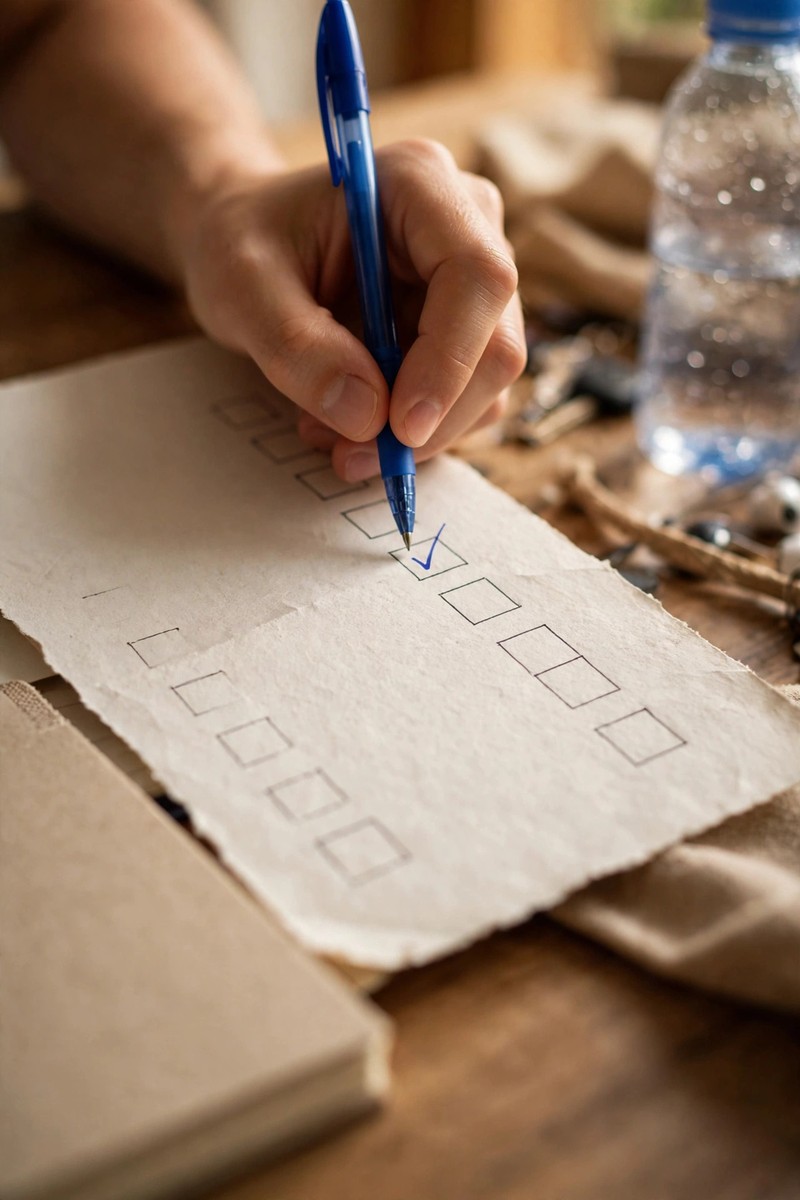
Every single step gets a little empty box in front of it. I do this by hand with a pen. There is something about a real paper checkbox that a phone app never gave me. When I check one off with my pen, I feel like I actually did something.
I cross it off hard, with a real line through it. That little line is my reward. No app notification ever felt as good as that pen line.
4. I Circle the First Three Steps
I look at my long list and circle only the first three steps. Those three are my whole job for today. Not the whole list. Just three.
When I first started building my online business with zero tech background, this saved me. I used to think I had to do everything in one day. Then I would do nothing. Three small steps a day is not a dream plan. It is a real plan. And a real plan gets finished.
5. I Keep the Checklist Where I Can See It
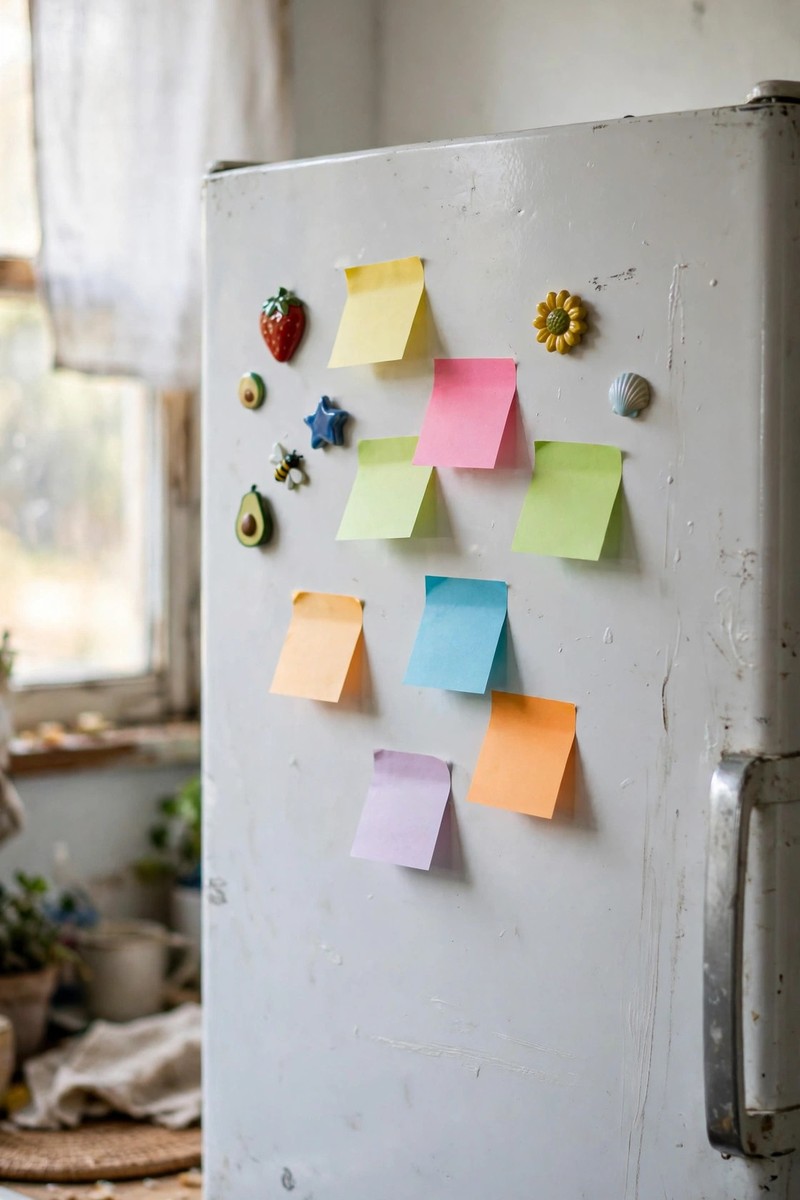
My checklist lives on the kitchen table or taped to the fridge. Not in a drawer. Not in a notebook I never open. Right where my eyes land during the day.
There were days I worked night shifts and came home too tired to think. On those days, a checklist on the fridge told me exactly what to do next without me having to decide anything. Decision fatigue is real. When you are already tired from work, a visible list does the deciding for you.
6. I Add Steps I Forgot Without Feeling Bad
Sometimes I start working and realize I missed a step. Before, I would feel stupid and want to quit. Now I just add it to the list and keep going.
Last month I was setting up my email list and realized halfway through that I had never written the welcome email. Instead of panicking, I added it as step nine and did it. The checklist is not a test I have to pass perfectly. It is a tool that works for me, not the other way around.
7. I Review the List Every Evening
Every night, even for five minutes, I look at what I checked off. I count the boxes. Even three checked boxes feels like progress because it IS progress.
Then I write the next three circles for tomorrow. That way, when I wake up, I never have to figure out where to start. Starting is the hardest part. This takes it away.
8. I Do Not Start a New List Until the Old One Is Done
This rule took me a while to learn. I used to start a fresh list every morning and leave the old one half done. That left me with ten unfinished lists and zero finished tasks.
Now I carry forward the unchecked boxes onto tomorrow’s page before I add anything new. It keeps me honest. It also keeps my kitchen table from being covered in papers, which my family appreciates.
Conclusion
A checklist is the simplest tool I own, and it is the one that made my online business real. I did not need better skills or more motivation. I needed to see my next small step written down in front of me. If you have a big task you keep avoiding, write it down tonight, break it small, and circle three boxes for tomorrow.